
Protein Shakes and Weight Management: What Two GPs Say
Share
Protein shakes are everywhere.
From supermarket shelves to social media feeds, they’re often marketed as a simple answer for weight loss, energy, or “getting healthy.” Yet many people are left confused, uncomfortable, or frustrated after trying them.
So what do doctors actually think about protein powders and meal replacement shakes?
In a recent episode of the Real Health and Weight Loss Podcast, two highly respected Australian GPs - Dr Lucy Burns and Dr Mary Barson - unpack where protein shakes can fit into weight management, and where they often go wrong.
This article summarises that conversation, highlights what to look out for, and explains why ingredient quality matters far more than marketing claims.
🎧 Prefer to Listen?
This full conversation is available below.
What Protein Actually Does in the Body
Protein is a macronutrient made up of amino acids. Some are essential, meaning they must come from food.
Adequate protein intake supports:
- muscle preservation as we age
- metabolic health
- satiety and appetite regulation
- recovery and strength
The doctors highlight that many people unintentionally under-eat protein - particularly when meals are rushed or heavily carbohydrate-based.
This is where the idea of protein supplementation becomes appealing.
Protein Powders vs Meal Replacement Shakes
One of the most important distinctions made in the episode is this:
Protein powders and meal replacement shakes are not the same thing.
-
Protein powders are supplements.
They’re designed to add protein to an existing meal. -
Meal replacement shakes are formulated to replace a meal.
They usually contain protein, carbohydrates, fats, vitamins, and minerals.
The problem?
Many products blur this line - while still being heavily processed and poorly formulated.
The Hidden Issue: Fillers and Sweeteners
A key note from both doctors is around hidden fillers - particularly ingredients like maltodextrin.
These are commonly used to:
- bulk up products
- improve texture
- reduce manufacturing costs
But they can also:
- spike insulin
- worsen bloating and gut symptoms
- undermine satiety
This is one reason many people feel worse after “diet” shakes - not better.
Who Might Actually Benefit From a Shake?
The podcast outlines several situations where carefully chosen meal replacements may play a supportive role:
People with very limited appetite
- including those using GLP-1 medications
- or post-bariatric surgery
Time-limited professionals
- long work days
- missed meals
- inconsistent nutrition
Short-term “emergency food” situations
- not a forever solution
- but often better than skipping meals entirely
The emphasis is always on quality, formulation, and context.
Why This Conversation Matters to Us
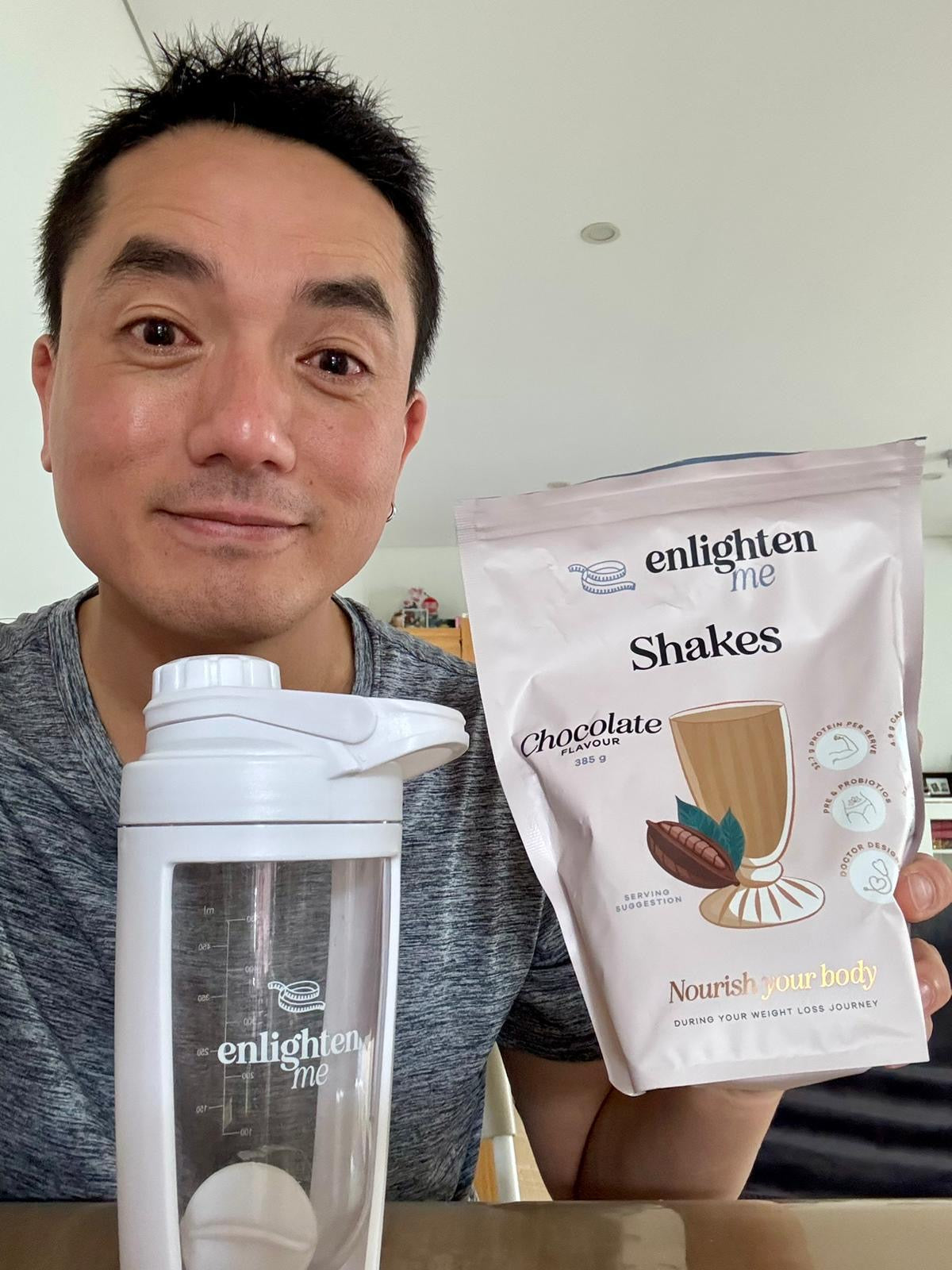
This episode resonated deeply with us at Enlighten Me.
Our program - and the formulation of the Enlighten Me Shakes - came after witnessing firsthand how many patients struggled with:
- bloating from artificial sweeteners
- persistent hunger from low protein, high carb shakes
- finding something clean and high quality they could commit to, with consistency
If you’d like to understand the clinical reasoning behind the product, you can read Dr. Angela Kwong's story here.
Meet the Podcast Hosts
Dr Lucy Burns
Dr Lucy Burns is a GP based on the Mornington Peninsula in Victoria, with a special interest in metabolic health and lifestyle medicine.
She previously ran a medical weight loss clinic, which inspired her education-first approach to sustainable weight management.
After adopting a low-carb, real-food lifestyle herself, Dr Lucy lost 20 kg and has maintained both her health improvements and mindset changes. She regularly speaks to both medical professionals and the public on metabolic health and nutrition.
Dr Mary Barson
Dr Mary Barson is a GP based on the Victorian Surf Coast with an honours degree in biochemistry.
She is known for her ability to translate complex science into practical, compassionate advice.
With a strong background in lifestyle medicine and counselling, Dr Mary brings both scientific rigour and empathy to discussions around weight management, polycystic ovarian syndrome and metabolic health.
Together, they host one of Australia’s most respected lifestyle medicine podcasts.
Final Thoughts
Protein shakes are not inherently good or bad.
But formulation, ingredients and purpose matter enormously.
If you’re navigating weight management, gut sensitivity, or inconsistent meals, education comes first. Understanding what’s in a product, and why it’s there - empowers better choices.
This podcast episode is an excellent place to start.
You are not alone in this. Begin with one informed shift - and let your routine build from there.