
Leucine and Muscle Protein Synthesis Explained
Share
Leucine and Muscle Protein Synthesis Explained
In our inbox this week, we received a thoughtful question from one of our local dietitians - someone we work alongside to support shared patients navigating weight management, menopause and metabolic health.
Her question was simple, yet powerful:
-
What is leucine?
-
How much leucine do I need per day?
-
Why is everyone talking about it in relation to muscle protein synthesis?
We love these kinds of questions - because they sit at the intersection of science and real-life care.
Let’s unpack it together.
What Is Leucine?
Leucine is an essential amino acid.
That means we cannot make it ourselves - we must obtain it through food.
It belongs to a group called the branched-chain amino acids, alongside isoleucine and valine. But leucine stands apart for one important reason:
It acts as a metabolic signal.
Leucine does not just contribute to muscle building - it switches it on.
Inside the body, leucine activates a pathway called mTOR - mechanistic target of rapamycin - which signals the body to begin muscle protein synthesis.
In simple terms:
Leucine tells the body it is safe to build and repair muscle.
Why Muscle Protein Synthesis Matters
Muscle is not just about strength.
It is:
-
Metabolically protective
-
Supportive of bone health
-
Critical for glucose regulation
-
Foundational to long-term mobility
When we lose muscle - especially during weight loss, menopause, ageing or illness - metabolic health can decline.
And this is where leucine becomes especially important.
How Much Leucine Do You Need?
Research suggests that to maximally stimulate muscle protein synthesis in one sitting, adults generally need:
Approximately 2-3 grams of leucine per meal.
For older adults, the requirement may be closer to 3 grams due to a phenomenon known as anabolic resistance - where muscle becomes less responsive to protein with age.
Importantly, this is not just about daily totals.
It is about reaching a threshold per eating occasion.
Once you reach that threshold, muscle protein synthesis is optimally stimulated. Below it, the signal may be weaker.
This is why protein distribution across the day matters - not just total intake.
How Much Leucine Is in Everyday Foods?
Here are approximate leucine amounts per serve:
-
100g chicken breast - about 1.7-2g
-
Two large eggs - about 1.1g
-
200g Greek yoghurt - about 1.6-1.8g
-
250ml milk - about 0.8g
-
One cup cooked lentils - about 1.3g
-
30g whey protein isolate - about 2.5-3g
-
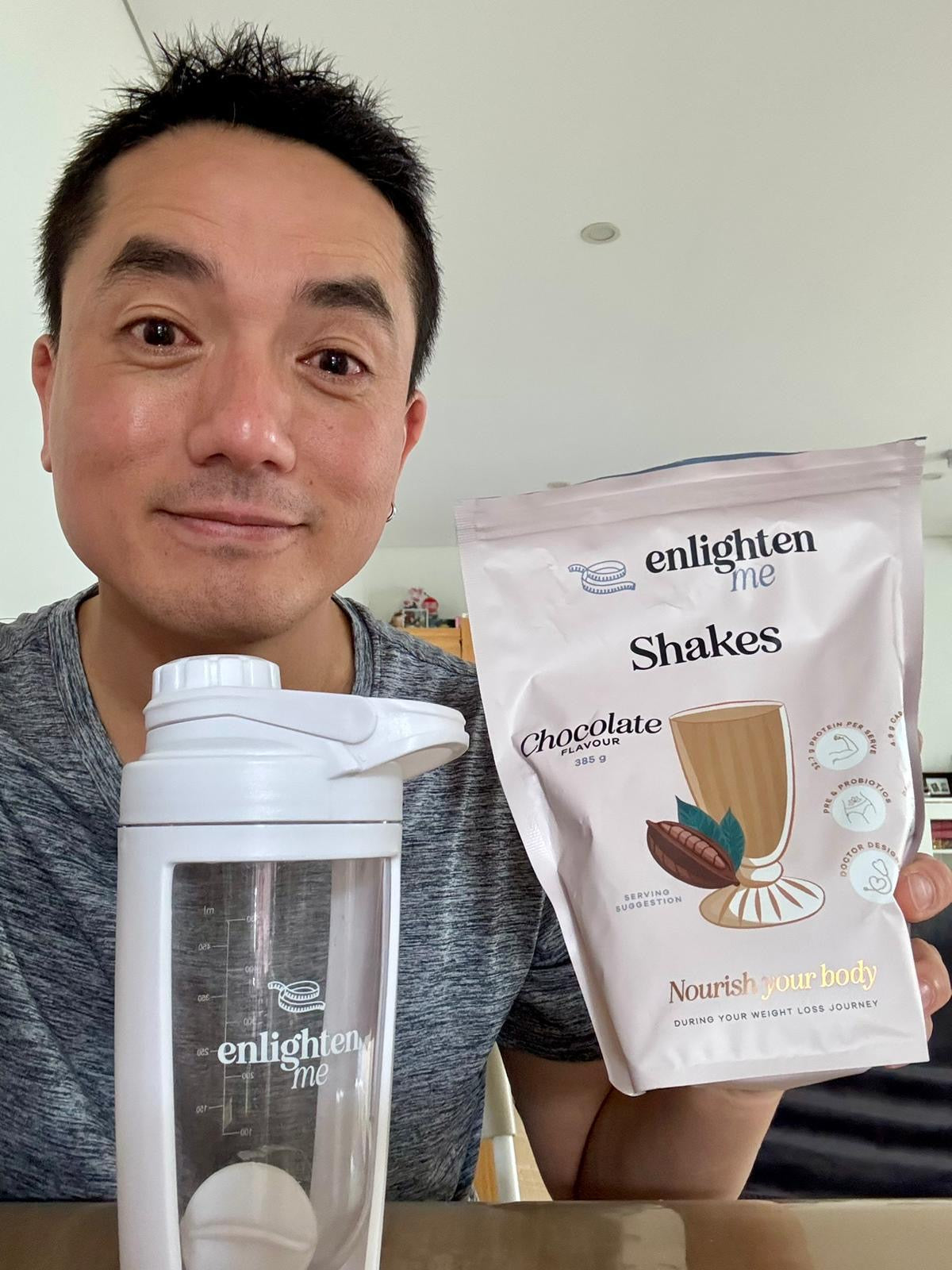
One serve of the Enlighten Me Shake
Vanilla - 3517mg (3.5g)
Chocolate - 3514mg (3.5g)
To reach around 3 grams of leucine in one meal, you may need:
-
150-170g of chicken
-
Four to five eggs
-
A large bowl of yoghurt
-
One shake
For individuals with reduced appetite - including those using GLP-1 medications or navigating menopause - these larger portions can be difficult to achieve.
This is where understanding leucine density becomes clinically relevant.
Why Leucine Matters More After 40
As we age, muscle becomes less responsive to protein intake.
This is known as anabolic resistance.
It means that:
-
Smaller protein serves may not stimulate muscle effectively
-
Higher-quality protein sources become more important
-
Even distribution across meals becomes protective
For women in perimenopause and menopause - a group we care deeply about - shifts in oestrogen also influence body composition.
Lean mass declines.
Fat mass increases.
The conversation shifts from simply losing weight to preserving muscle while improving metabolic health.
Leucine becomes part of that discussion.
Is All Protein Equal?
Not quite.
Whey protein naturally contains a higher percentage of leucine compared to many plant proteins.
Plant-based sources can absolutely contribute - but may require larger volumes or strategic combining to reach threshold levels.
The goal is not perfection.
It is awareness.
A Clinical Takeaway
For Dietitians and Health Professionals supporting patients through:
-
Weight loss
-
GLP-1 medication use
-
Bariatric pathways
-
Menopause
-
Ageing
Leucine is not a buzzword.
It is a signal.
A reminder that muscle preservation is not cosmetic - it is metabolic.
And for patients, the message is gentle:
Adequate protein, spaced throughout the day, with attention to quality - can support strength, function and long-term health.
Closing Reflection
We are grateful to work alongside dietitians and other health professionals who ask these questions - because when we collaborate, our patients benefit.
If you are navigating weight loss, menopause or reduced appetite, consider not just how much you are eating - but the quality and composition of your protein.
Muscle is protective.
And nourishing it is an act of long-term care.
You are not alone in this. Start with one protein-rich meal and build from there.