
How Much Protein Do You Actually Need on a GLP-1?
Share
Picture this. You're sitting with your dietitian, seeing your protein and calorie targets being calculated for the first time.
You've spent years cooking dinner for your growing teenagers, yourself and your partner, barely thinking about your own plate.
Now there's a number in front of you asking you to eat more protein while eating fewer calories overall, and it almost feels impossible to reconcile, especially on a day when a GLP-1 medication has quietened your hunger to very little.
If this sounds familiar, you're not doing anything wrong, and you're not alone. This is one of the most common reactions our collaborating dietitian and exercise physiologist, Chantelle, sees in our clinic. Here's why those numbers can feel so shocking, why this stage might actually be the easiest time to learn what your body needs, and where a high protein meal replacement shake can help you get there without needing to force in such large amounts of meat.
Why Your Protein Target Can Feel So Different From The Generic Advice
Chantelle is dual-qualified as a dietitian and exercise physiologist, and works alongside and supports many of our patients through their medical weight management journey, a number of whom are taking a GLP-1 medication.
A quick search for GLP-1 diet advice tends to turn up the same generic tips: eat less, move more, cut your carbs. But those tips don't account for your current weight, your medication, your activity level, or your life stage, whether that's navigating perimenopause or something else entirely. That's why Chantelle calculates an individual protein and calorie target for each person she sees, rather than working from a generic rule.
For many people, seeing the actual number for the very first time can be quite confronting, because it usually asks for an unusual combination. Protein needs rise while total calories come down. Chantelle often explains it to her clients this way: when your calories come down, protein needs to make up a bigger share of what you eat, so your body still has enough to support your muscle mass while you're losing weight.
Nutrition is only one part of the picture. Depending on your circumstances, support from your regular GP, dietitian or other members of your healthcare team can help too.
Why The Early Weeks Might Actually Be The Best Time To Learn This
The early weeks of taking a GLP-1 medication can bring initial side effects for some, such as bloating, nausea or a change in bowel habit, on top of a genuinely reduced appetite. It can be a lot to navigate at once.
But it can also be the quietest that food noise will ever be. With fewer competing cravings and less hunger to work against, this stage can actually be one of the easiest times to learn what your body needs, before old habits or routines settle back in. Many of us have only ever worked from generic advice, without a personalised target that reflects the phase of life we're genuinely moving through. Learning it now, while your appetite is low, means you're building the habit at a point when it's likely to be the easiest to build.
Why Meeting A Higher Protein Target Can Feel Harder Right Now
For many of the patients Chantelle sees, the shock isn't just the number. It's realising just how much of their day is spent preparing meals for a partner, growing teenagers or others, with little thought given to their own plate. Once that existing intake is laid out next to a new, higher protein target, it can feel genuinely mind-boggling, particularly when appetite is already reduced.
Solid protein, like meat, can be genuinely hard to get through in this window. It takes preparation, and it can feel like too much when you're just not that hungry.
There isn't going to be one single right way to reach your protein target. For some people, a shake can make it easier to get there on the days whole food protein feels like too much, particularly when you're preparing a quick lunch for yourself rather than sharing a full family meal.
Questions Worth Asking Your Dietitian Or GP
- What is my individual protein and calorie target, based on my current weight, activity and medication?
- How can I meet that target on the days my appetite is at its lowest?
- Do I need to get all of this protein from whole foods, or are there other ways to make up the gap?
- Is a high protein shake a reasonable option for me between meals?
How The Enlighten Me Shake Can Help
Every decision in our formulation came back to one question. Would this make it easier to meet a higher protein target on a low-appetite day?
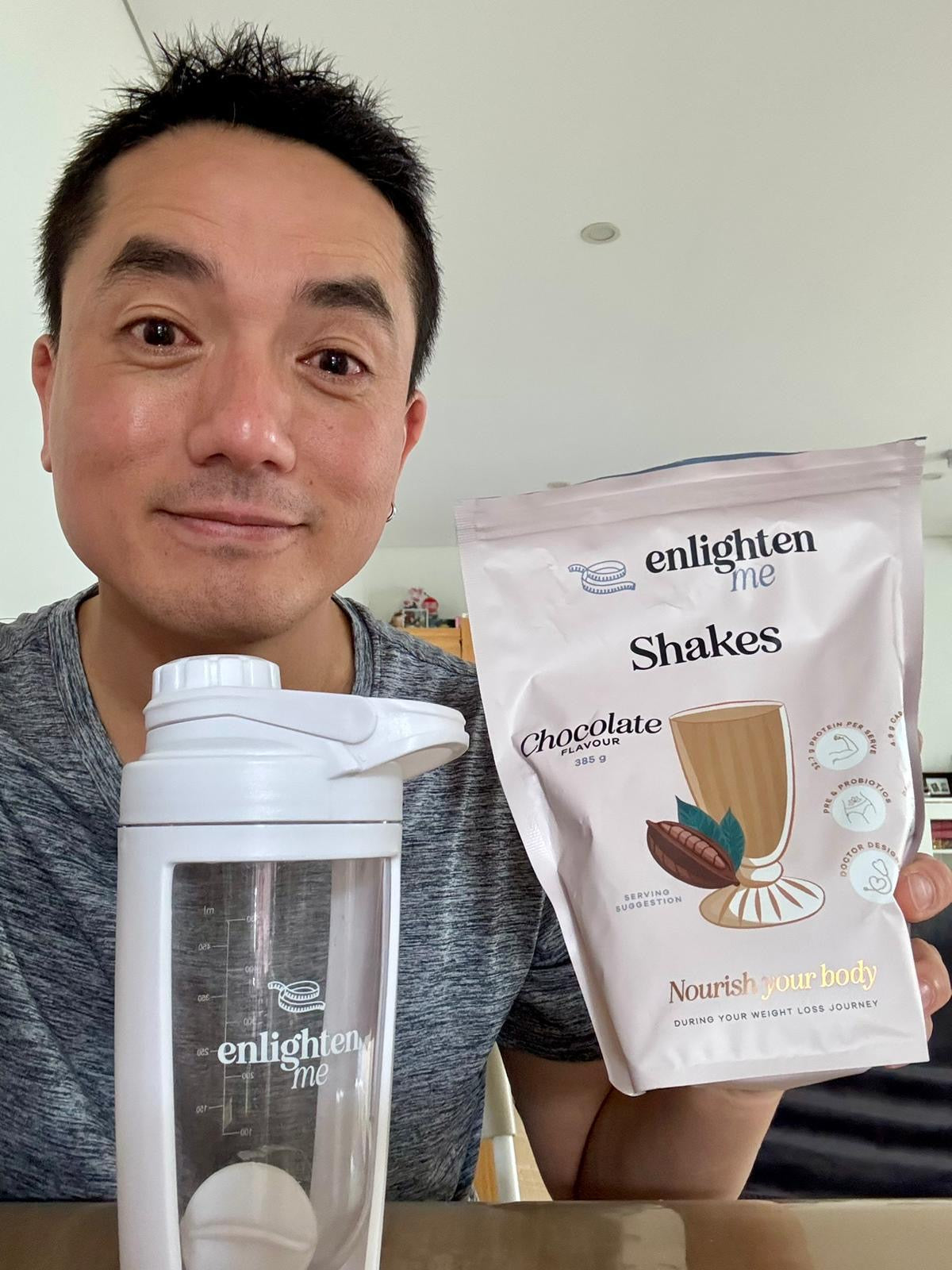
- Enough protein to matter - each serve of the Enlighten Me Shake has 32g of protein, roughly a palm-sized serving, to help you meet a higher target without needing to consume a large piece of meat at every meal.
- Easier to finish - kept light in flavour rather than super sweet, so it's manageable even on the days your appetite is low.
- Quick to prepare - ready in seconds, ideal on the days you just want something simple for yourself.
- Simple, considered ingredients - we've left out the common bulking fillers and artificial sweeteners, so you won't find any maltodextrin, inulin or sugar alcohols.
A Few Questions We're Often Asked
Can a shake really help me meet a higher protein target?
For many people, a meal replacement shake can be a practical way to top up protein as part of an overall nutrition plan, particularly on days when appetite is low or preparing a full meal feels like too much. It's always worth discussing an individual target with your dietitian or GP.
Do I need to see a dietitian to work out my protein target?
Not everyone does, but many people find this helpful. Our dietitian Chantelle can calculate a target based on your weight, goals and medication, so you get individualised advice rather than generic advice.
Can I use this alongside my GLP-1 medication?
Many people find they use it a little differently to how a meal replacement shake is traditionally used. Rather than swapping in a shake to deliberately cut calories, it's often used simply to help meet nutritional needs on the day's appetite is naturally low, since it can be genuinely hard to get enough nutrition in when you're just not hungry.
A Closing Thought
Reducing your calories while still meeting a higher protein target doesn't have to be complicated. It can be simple, and that matters, especially while taking a GLP-1. Whether that protein comes from whole foods, or is supported with a high protein meal replacement shake, is entirely up to what works for you.
If you'd like some support working out the specifics for your own circumstances, our Product and Nutrition Consult is a good place to start.
This blog provides general information only. For information that is tailored to your own circumstances, please speak to your own treating practitioner.